Showing posts with label black and white photography. Show all posts

Sunday, November 29, 2015

Twist Back and Turn Left


Watching from the outside, the wooden planks that make up the enormous barrel of the DemonDrome Wall of Death pulsate like a beating heart as the motorcycles race around on the other side. 


It seems like a big step, taking a motorbike from a ramped wooden boardwalk to a vertical wall and keeping it there.  I guess that at some point though wanting to go faster and steeper leads to a Wall of Death, and that pretty soon even defying that most elemental law of physics isn’t enough to get your kicks.  That must be how Duke Seymour ended up riding a vintage 1927 Indian motorbike, that’s easily three times older than he is, around his family’s Demon Drome Wall of Death stood up with his t-shirt pulled up over his face or performing a side-saddle iron-cross hanging out fifteen feet above the floorboards.

The Demon Drome Wall of Death arrived in the UK from America in 1927 and started touring the country with funfairs.  Back then health and safety wasn’t such a big deal so the original owner, Elias Harris, went right ahead and built a car with a special platform on it so that he could drive it around his Wall of Death with his pet lioness, Rita, sat on the bonnet.  For the past ten years “Dynomyte” Dave Seymour and his family have toured the Demon Drome Wall of Death show around the UK and Europe, recreating the original show in every aspect apart from the live big cat.  Dave and his son Duke ride 1927 Indians and custom Honda CD200 hardtails, performing tricks and racing each other, with Dave’s daughter Alabama even sitting on her old man’s handlebars with her arms outstretched for a few laps, as if it’s a perfectly normal thing for a teenage girl to do with her Dad on a weekend.  The wooden wall flexes as the bikes pass the knees of the audience who peer over the top of the giant barrel, providing the suspension that the bikes lack.  The faster the Seymours ride, the greater the centripetal force that pins their vintage whips to the old planks and the safer they are.  It doesn’t look it though - from the top looking down the whole story looks insane; the roar of the bikes is damn loud, it’s hot and the incense of exhaust fumes rise up from the middle.  Every sense piqued, a spin on the teacups and a stick of candy-floss doesn’t seem quite so crash-hot afterwards.   


Sunday, July 12, 2015

Like a Leica


For the past few months I've kept an extra camera slung over my shoulder alongside my go-to kit.  It's a Zorki 4K; a Russian rangefinder that I stumbled across in a vintage store at a price that made it good value as a bookend, let alone a functioning camera.  The Zorki 4K is a soviet-era copy of the Leica II produced by the KMZ factory (Krasnogorsk Mekanicheski Zavod, which translates as "Krasnogorst Mechanical Factory"), and even takes Leica L-mount lenses although it comes with the acclaimed Jupiter-8 50mm f/2 lens (a Zeiss-Sonnar clone).  It was introduced in 1973 as a successor to the Zorki 4 which had been produced since 1956 (featuring improvements such as a modern film advance lever rather than a knurled metal knob), and was widely exported to the west until production ceased in 1978.  The camera is fully manual and has no light meter, so I've been making a best guess every time I've used it over this past spring.  As was to be expected, a few of the frames from that first roll of film were slightly over-exposed although I think that might partially be down to it being quite difficult to accurately set the shutter speed on my camera (you have to lift a small knob, twist it to match the desired shutter speed and let it fall into place, which mine doesn't always do particularly convincingly), however I'm pleased with the sharpness of the photographs that I did expose correctly.  Below you'll find a selection of the best of those photographs from the first film through my Russian-rip-off-rangefinder.  I hope that you like them.


Monday, January 5, 2015

A Glimpse Through The Lens: Jane Bown


Jane Hope Bown, photographer, 
13th March 1925 - 21st December 2014

Jane Bown was a staff photographer at the Observer newspaper for over fifty years, from 1949 until shortly just before her death last month at the age of 89.  She was a legendary photographer who produced a large and consistent body of imagery over her career, working on 35mm film and almost exclusively in black and white until the end of her career.  She was famous for using only natural light, favouring indirect sunlight from a north facing window to allow her to shoot at her preferred setting of f2.8 at 1/60 second.  If she expected the light to be bad then, rather than use flash, she would set out (usually on the bus) to an assignment with the Observer picture editor's anglepoise desk lamp in hand.  Bown was known to be uninterested in her equipment - she bought all of her cameras second hand and carried them in a wicker basket, and ignored the cameras inbuilt light-meter in favour of judging how the light fell on the back of her outstretched hand.  
She had the unique ability when shooting portraits of the famous to produce iconic images from informal settings, putting her subject at ease and often completing the shoot within ten minutes or capturing portraits whilst they were being interviewed.  These candid moments featuring some of the most iconic faces of the last 65 years were donated to the Guardian (the parent company of the Observer) and stand as a record of modern British popular culture over that period. 

Camera-shy playwright Samuel Beckett - the third of five frames shot when Bown politely cornered him outside the stage door of a theatre.

Dennis Hopper

Queen Elizabeth II

Sir John Betjeman photographed, by the looks of things, near Daymer Bay in Cornwall.

Bjork

Michael Caine

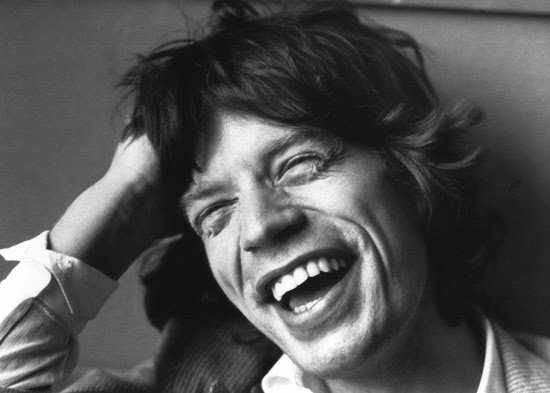
Mick Jagger, mid-interview.

Richard Nixon

Tony Benn

All images copyright Jane Bown/the Guardian

Sunday, November 2, 2014

Transylvanian Tales


The weekend of All Hallows' Eve seems like the appropriate time to share some photographs from a trip that I took to Transylvania over the summer.  Scroll down for all manner of spooky scenery, snarling animals, scythes and castles, but don't be totally fooled; Transylvania in summer is a wonderful destination for hiking and for every day of mist and rain that we endured we also enjoyed two of summer sunshine strolling in high alpine meadows.  Despite failing my usual primary criteria by not being next to the ocean, I can attest that it's well worth a visit.  

The cross on the mountain top above the town of Busteni is enormous, although it doesn't look it in the top left of this image.

Is Vlad a pig?

Sodden sheep dogs doing their best impressions of hell hounds.

Bram Castle: home of Vlad the Impaler and the inspiration for Dracula's Castle.

The Carpathian Mountains offer some stunning scenery.

Yup, scythes.  Less Grim Reaper and more hay harvest in this case.

Bram Castle.

Carpathian Bears.

Shifting sheep, come rain or shine.

Brasov.  They put a big sign on top of the hill overlooking the town in case you forget.

Transylvanian tracks and trails.

Sunday, February 23, 2014

Don't Buy It, Build It: My Yellow Submarine


Surfing and making photographs are two pretty defining passions of mine, and every now and then they inevitably cross over. 

But, if I’m honest, I’d always choose to be in the sea rather than stood on the beach watching it.  With the cheapest commercially available waterhousing for a decent camera costing at least a grand (I’m not talking about swimming out with a go-pro here) it would seem that water-based surf photography is a game for an ever-shrinking number of professionals or those with a hefty hobby budget.  I mean, how many jobbing photographers these days have at least a grand burning a hole in their pockets for a piece of kit that they’d be lucky to see generate a few hundred quid in sold images?  

Not me.  So I made one.


Measure twice and make a model.

I ended up making two waterhousings actually.  I have long held on to the philosophy that if you’re able to do something yourself then you should do so – not just as a way of saving money or acquiring something that you couldn’t otherwise afford, but as a means of learning new skills and challenging oneself.  Perhaps it’s just that I have a problem with writing to-do lists and not sitting still, born of an awareness that time is a precious commodity. 
I started out researching waterhousings for surf photography – commonly known as “splash” housings and different to their deep-sea diving counterparts.  I had the choice of fiberglass and resin as construction materials (the honours project for my degree involved the use of advanced composite materials for marine engineering applications, so I was comfortable with that option) or folded and welded aluminium which I'm slightly less au-fait with.  I went with the aluminium challenge.  
A photographer who runs a gallery at the end of my street, Nick Wapshott, kindly lent me his commercially bought waterhousing overnight to take a look at, and I asked a few questions of Tim Nunn (editor of Wavelength Magazine and professional surf-lensman) who gave me some advice on how to trigger the shutter mechanism.  This was the biggest issue – I had no problems making a waterproof box of some description to put my camera in, but finding a way of pressing the button without springing a leak was a challenge.  As with most of my projects, I started out with fairly modest intentions until I realised how much time and effort I was investing and then figured that I might as well do a proper job.
I measured up my cameras (I shoot with the slightly puffed-up digital version of an older analogue camera and they’re such similar sizes that I wanted to make a housing that they would both fit and function in) and made cardboard models.  Friends and acquaintances kindly rummaged in the scrap bins of their workshops and garages, and from a range of sources I ended up with some odd lengths of aluminium tubing that I could machine into lens ports, a bigger piece that might fit a camera, and some offcuts of thin-guage sheet aluminium that I could fold into a box. 
Now, I like to think that I’m fairly handy but I definitely know my limits and one of those is TIG welding aluminium and another one is precision milling.  Luckily for me, just down the raod from me on Bradfords Quay in Wadebridge are two companies who specialise in fettling metal:  Daften Die-Casting specialise in precision aluminium work and Grant and Kevin there took my crude CAD designs and machined the face plates for my housings with the incredibly fiddly grooves for the o-ring seals.  I then delivered a box of bits to Will Irons at MGC Engineering a couple of doors along for the guys there to TIG weld together for me.  Where I would undoubtably have blown holes in the thin aluminum they executed seamless joints that are not only functional, but beautiful in that functional raw metalwork sort of way.

The MGC magicians worked wonders with welding.

I now had two containers that looked a lot like camera housings.  I took them back to Daftens where they were powdercoated bright yellow because if you’re going to make a submarine then it really ought to be a yellow one, right?  I’m sure that there’s a functional reason for marine submersible equipment often being this colour but I don’t need to know about it.

The "Soucoupe" and "Jacqui" nearing completion.

I sourced some thick, clear acrylic and had it cut to fit the face plates and ports then got back at the handles of a lathe and surprised myself at my ability to actually work accurately when I turn my mind to it, turning down the tubing into lens ports to accept my 50mm prime lens.  A fisheye lens would require a domed port, something that there is no way I could produce, so I settled for the fact that I would be shooting from slightly further away from the action and capturing a realistic point of view of what the human eye would normally see.
I stayed late at Otter Surfboards one Friday and mixed up a small batch of epoxy glue to nervously assemble the faceplates and ports, horribly aware that just one tiny smudge of resin on the lens port would bin the entire project.  Finally, to solve my switch concern, I found a company that produces housings for underwater dive cameras and scientific survey equipment (Greenaway Marine) and ordered a simple mechanical switch from them that I could machine to fit my housing and camera.  I assembled everything and then, in early December, took one of the empty containers for a swim in the waves, relieved that it didn’t fill up with seawater and drag me down to the seabed like an anchor.  I then put a roll of film in my analogue camera and took that out, realising just what surf photographers would have had to go through in the days before the digital revolution – swimming back to the beach every thirty-six shots to take the whole business apart and change the film must have been hard work: Thirty-six shots really doesn’t last very long in the sea.

Then the “weather” arrived, and the sea was near enough off-limits for any sane attempts at water photography for weeks on end.  Until this week.  Torn between making up for a lot of lost wave-riding opportunities and testing my handiwork, I tried my best to strike a balance in between actually doing some work.  Having surfed on one day with great waves and beautiful flat, grey, wintery light that looked as cold as it was, I returned to the following spot with my housemate Ben the following day with my digital camera nervously ensconced in it’s (hopefully) waterproof yellow case.  With more than thirty-six exposures to play with, I think that in between swimming against a rip like a river, wearing some monstrously thick wedges on my head and getting bounced off the seabed a lot, I got some alright shots for a trial run.

Here below are some of the results:


Under a pitching lip.

Foam textures.

Scratching over a lump.

Difficult conditions for surfing and shooting.

Benny dodged this barrel and tore into a massive turn just as the whitewater engulfed me.  He's been kicking himself ever since for not tucking himself in there.

The lefts here are normally not much good.  
Not on this day though.

Pitching