Showing posts with label Sri Lanka. Show all posts

Sunday, April 15, 2012

The Old Man and the Sea


"Then he began to pity the great fish that he had hooked. He is wonderful and strange and who knows how old he is, he thought. Never have I had such a strong fish nor one who acted so strangely. Perhaps he is too wise to jump. He could ruin me by jumping or by a wild rush. But perhaps he has been hooked many times before and he knows that this is how he should make his fight. He cannot know that it is only one man against him, nor that it is an old man. But what a great fish he is and what he will bring in the market if the flesh is good. He took the bait like a male and his fight has no panic in it. I wonder if he has any plans or if he is just as desperate as I am?"

The Old Man and the Sea
Ernest Hemingway


Images from the top down:

La Panpa, Playa Pelada, Costa Rica
Garza Sport Fishing, Costa Rica
Nets, Playa Pelada, Costa Rica
Portrait of an old fisherman number 2, Arugam Bay, Sri Lanka
Beached Bows, Playa Pelada, Costa Rica
Pelicans, Playa Guiones, Costa Rica
A Productive Day, Playa Garza, Costa Rica

All photography copyright Mat Arney.


Last weeks "A Meditation In Motion" podcast may not have shown up if you use an RSS feed to access An Tor Orth An Mor, to access last week's post please click here.

Sunday, April 24, 2011

Choo-choo


I know what you're thinking..."what's with all the pictures of trains?" right? Trains aren't meant to be cool. I reckon otherwise though; I kinda like them as a means of getting around.

At some stupidly small hour this morning whilst most people were either fast asleep or being turfed out of nightclubs, my friend Kyle and I got back from a trip to Morocco. We went from Truro, Cornwall (well I did, Kyle started out in Wales) and got the train all the way to Marrakech with our surfboards. From there it was just a bus ride to the coast and we could get some waves. A medium haul surf trip entirely on a rail: Start-stop-start again, clackety clack, tickets, platform numbers and departure boards, four capital cities, Europe and Africa, pack un-pack, headphones, being kicked off platforms, midnight cafes and crazy taxi drivers, dining cars, eleven trains three of which were underground, a ferry, "you can't bring a surfboard on this train", books and looking out the window, seeing towns as the graffitied backs of warehouses and industrial units, "you want hashish?",lots of coffee in paper cups, wildflower meadows, funny looks and a jacket for a pillow.
We got a few good waves and climbed a mountain.

I have more rolls of film to develop than I can carry in my hands so once they're all done and I've absorbed and reflected on the whole damn deal I'll post a few up and put some words to it.

Why?
Because sometimes it's important to make the journey as important as the destination, put your feet on the stepping stones and nopt just jump right over them. Take a little bit of time.

Images:
The top one is the California Zephyr, which I caught from San Francisco to New York with my old man a few years back so that we could see what America looked like.
I drove my car onto the back of the Indian Pacific and let it carry me across the Nullabor desert right across Australia rather than sit on my own driving on a straight road for three days when my road-trip co-piolt couldn't make it.
The trains in Sri-Lanka are cool, old and clunky with little picture postcard train stations straight out of 1950's Britain. To get my surfboards on I had to pay for a first class ticket which was about a pound more.

Sunday, December 26, 2010

Back In The Bay - The Boxing Day Tsunami 6 Years On


The Boxing Day tsunami hit Arugam Bay, on the East coast of Sri Lanka at 8.45am six years ago, taking the lives of 300 people, roughly twenty percent of the community’s population.
Approximately two hours previously an undersea earthquake with a magnitude of between 9.1 and 9.3 had struck off the coast of Sumatra, near Indonesia’s Mentawaii Island chain, and the resulting waves of tsunamis caused devastation across the Indian Ocean. The International community rallied and donated more than US$14 billion for aid and reconstruction.
But how have some of the communities affected by the tsunami bounced back? The list of coastal areas impacted by the tsunamis includes some of the most revered destinations in the surfing world, so it’s inevitable that places that we hold dear to our collective hearts were affected.


It’s six years on, and the small village of Arugam Bay, spread out along the stretch of the bay from the lagoon to the point that draws surfers, seems to be back on track; there’s a new bridge over the lagoon, hotels are doing a brisk trade in the high season and there are multicoloured fishing boats and outriggers pulled up on the berm.
But talk to any fisherman mending nets on the beach and you can tell that the memory still cuts deep…”and then the wave came and everything died” as one man told me.
I didn’t want to dwell too much on the past, but I was interested in the knock on effects and the hangover of this enormous natural disaster years after the international money donating public have moved onto the next cause and the aid agencies and volunteers have moved on. Sri Lanka is an interesting case to look at because of the additional ingredient of a long running civil war which only ended in May of 2009.
There are still piles of rubble and half destroyed buildings stood on their concrete foundations which are destined to remain as reminders. In January 2006 the government, which had been accused of standing by idly and contributing little to the relief effort, enacted the now infamous “100 metre rule” which forbade anybody living within 100 metres of the Indian Ocean from rebuilding their homes on the former site and forcing many fishermen inland away from their boats and the sea. This measure was designed to protect coastal communities from the possibility of more tsunamis however given the right amount of cash in the right hands, there appeared to be loopholes with the result being that many hotels were rebuilt in the same spot, and on many other parts of the coast the whole debacle was seen by locals as a back handed way of acquiring coastal property ripe for development.
The new bridge that crosses the head of the lagoon from Pottuvil to Arugam is very impressive, and should be at a cost of over US$10 million which was stumped up by the US taxpayer. The locals are appreciative, but unsure as to why such a fancy bridge was required in view of the still ongoing reconstruction. Likewise, the wide main road through town (the only road in town) was being resurfaced whilst I visited, and pushed further south. Word was that this resurfacing work was being funded by the Chinese with many holding the cynical suspicion that this was a favour in the bank waiting for the time to come when land rights on the coast further south are opened up. Walking on what remained of the old road surface, I couldn’t quite see the need to re-tarmac it for the second time in six years and shared the local’s suspicions.
It’s not like tuk-tuks cause undue wear and tear.


And I can quite understand the interest. The East coast of Sri Lanka is beautiful, remote and undeveloped in comparison to the West coast, due in large part to the civil war and the LTTE (Tamil Tigers) presence. Army check-points and roadblocks still interrupt the main road and soldiers toting AK47s regularly climb aboard the buses and patrol the beach. It felt odd running up the point in boardshorts with a surfboard past four man armed patrols in combat fatigues with heavy boots sinking into the sand. But with the advent of a tentative peace in May 2009 Sri Lanka is becoming more and more popular and it won’t be long before the East coast pops up on the radar. At the moment the bumpy ten hour bus ride puts off all but surfers and the most determined backpackers but that could easily change.
The only hope is that the locals of Arugam Bay retain their community spirit in the presence of development. Following the Boxing Day Tsunami the government proposed several large hotel complexes to help fast-track the areas recovery which were rejected by the Arugam Bay Tourism Association. It seems that local businesses prefer things the way they are, and want to maintain progress at a home-made and locally led rate. All power to them. At present the village gives you the impression that you’re onto something new despite the fame of the wave breaking on the point for the past twenty plus years, you wouldn’t want to be queuing for set waves with too many more people and there’s a nice atmosphere about the place.
It’s worth remembering that recovery and rebuilding communities, homes and livelihoods takes a lot more time than these natural disasters remain in the consciousness of people around the world for. The memories linger and it takes time for things to return to any semblance of normality, during which it’s all too easy for areas to be opened up for exploitation of their natural beauty and resources by people more shrewd and cunning than they are compassionate.


I’ll end on a nice note though: The story of a friend of mine who arrived in Sri Lanka shortly after the tsunami. He decided not to change his plans and headed to the East coast to see how he could lend a hand and catch some waves in between. With another travelling surfer, he bought a couple of bags of cement and set about building a football pitch for the local kids to provide them with a bit of light hearted respite. They cleared some land, dug holes, stripped big branches which they lashed together and cemented into the ground as goalposts, procured a ball and then gathered a crowd of kids for the inaugural game.
Everybody plays cricket in Sri Lanka.


Sunday, November 14, 2010

Indian Ocean Faces


Old Tamil Lady, Ella, Sri Lanka.

Bhodisatva, South West Sri Lanka.

Village Elders, Nusa Lembongan, Indonesia.
Rickshaw taxi rider, Java, Indonesia.
My old boss Rod on a vineyard in the Margaret River area, South Western Australia.
My friends Dr. and Hotchy at Big Day Out music festival, Perth, Western Australia.
Little girl with an ice-pop, Tokyo-Sexwale township, Jeffreys Bay, South Africa.
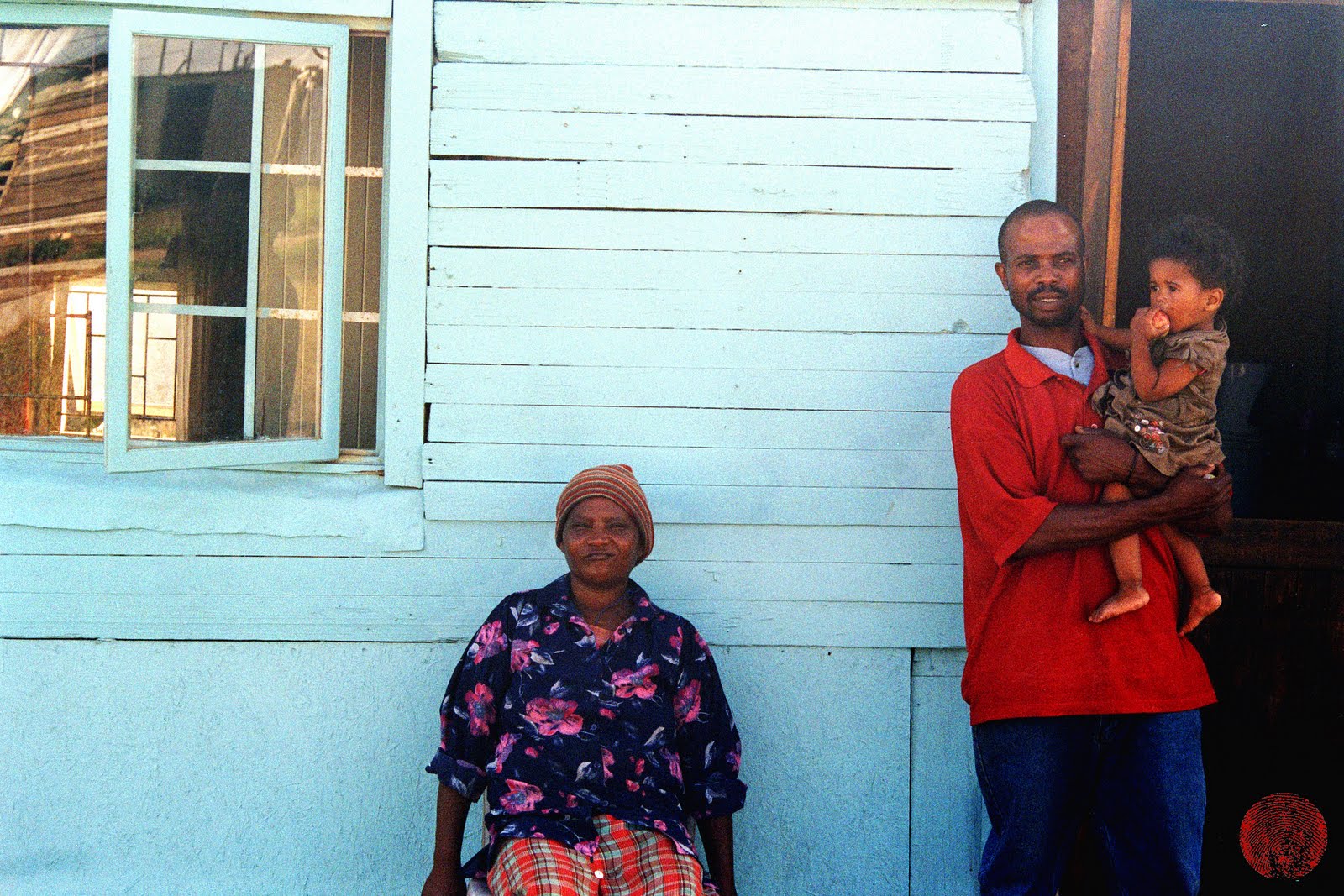
Xosa family, Tokyo-Sexwale township, Jeffreys Bay, South Africa.
Young Bedu men, Al-Ashkara area, Oman.
Outside the coffee shop, Al-Ashkara, Oman.
Here's a grip full of portraits, old and new, from just a few of the places around the edges of the Indian Ocean.
Each of the Worlds Oceans are so great that there is a massive amount of diversity to be found around the edges, diversity of climates, cultures, religions, ethnicity, wealth and environment to name a few. Whilst I've splashed around in and traversed each of these Oceans, the Indian Ocean is that which I have probably spent the most time circumnavigating and exploring, and there're still a ton of places around the edge and islands in the middle that I'm desperate to check out, and a few that I still can't (Somalia, Yemen and Burma). There's still time yet though.
My thanks goes out to the people above for allowing me to take their picture, I fully squirm in front of the camera which is why I hide behind it so I appreciate it when people let me do this to them.

Sunday, August 15, 2010

Have Fun with your Fins!


Fins are a pretty important part of a surfboard. They ensure that you go in the direction that you want to be going in rather than spinning around uncontrollably (as any of you who have tried to master an alaia will have found), providing drive and lift. Unless you never have to take your craft anywhere or are a fussy professional surfer, your surfboards will most likely have a changeable fin system. These allow you to take your fins in and out and try different shapes and sizes. On a recent trip to the right hand points of South East Sri Lanka, I went one step further.

Assymetrical surfboards have been around since the late 1950's when surfers at Malibu in California realised that, because they only ever surfed the same right hand point break, they only ever went the same direction and so could adjust their boards accordingly.
The trend for assymetrical boards came and went but has been bubbling away in any locale where there are long point break waves. Carl Ekstrom has been shaping assymetrical boards for years now for the surfers of Southern California and in particular the points of Baja Mexico.
The idea of assymetrical boards and fins is this: the side of the board "facing" the wave is designed for speed, flow, control and drawn out turns, tending to be gunnier with more holding power, whilst the "open" side of the board is designed with turning in mind, so is shorter and more pivotal. The telling trait of an assymetrical board is the unusual step tail, where the back end looks like a cut & shut marriage of a semi gun and a fish.

I don't get to surf point breaks quite so often anymore and so my boards, like 98% of all surfboards, are multi-directional. But I had my friend Nick Blair open up the options for an assymetrical fin set-up on my last board, with five fin plugs allowing me to ride my board as a thruster, twin, twinzer, quad, 5-fin or, as in this case, assymetrical.
The half a quad fin set-up you see on one side of the board is on the "wave" side, providing hold and drive by spreading out the area of the fins. The big twin fin on the other side (the side I'd turn towards when cutting back) provides the same amount of fin area, so equal drive and lift, but concentrated into a single fin which the board can pivot around allowing for sharper turns.
I took it out a few times and it went well, super drivey and fast down the line and then loose through turns and transitions. Having all of these options on a single board allows it to be more versatile, and allows you to get to know the board and how different fins affect performance, which in turn can only help to improve your surfing. So get out your allen key and go have some fun with your fins!

Bottom image (surf shot) by Dan & Neda at onelovesurffilms, cheers guys.