Showing posts with label Documentary Photography. Show all posts

Sunday, November 16, 2014

Turkish Delight

The Blue Mosque at dawn.

Every holiday is a bit of a busman's holiday if you earn your living (or at least part of it) with a camera pushed up against your face, and I absolutely love that.  Documenting trips is how I learnt to make photographs and I still enjoy playing the tourist and the challenge of trying to capture the essence of a place in a few frames over the course of a few days.  

Because it's not "work", I like to set myself little challenges and mini-projects when I go away to make sure that I don't just go through the same motions as when I'm shooting back home; it's how I learn and develop.  When Kate and I travelled to Istanbul in the summer (we were hoping to travel on trains tracing the last leg of the Orient Express route but relentless engineering works forced us onto overnight buses instead) I limited my kit to a 35mm camera with a 50mm prime lens, a forty year old 35mm point-and-shoot compact camera and a few rolls of film.  I wanted to see how losing the ability to zoom in and out would affect how I composed my images and documented what I saw.  Inevitably there were moments when I found myself frustrated by the restrictions that I had placed on myself and there were shots that I knew could have been better when I pushed the shutter button, but I turned off my internal auto-pilot, found some work-arounds and moved my feet more.  Below is a selection of my favourites from a few rolls spent wandering this incredibly interesting and culturally rich city.

No genies.  I checked.

Power cubes for city strolling.

Aya Sofia (which faces the Blue mosque) at sun rise.

The incredible marble walls inside the Aya Sofia.

Arabian lanterns in the Grand Bazarre.

Carpets for sale.

A beautiful public fountain on the Hippodrome.

Çay

Dried fruits inside the Spice Bazaar.

And mountains of Turkish Delight.

There are millions of street cats in Istanbul.  This little guy had got himself stuck halfway up the stepladder outside a book stall in the market.

Sunday, November 2, 2014

Transylvanian Tales


The weekend of All Hallows' Eve seems like the appropriate time to share some photographs from a trip that I took to Transylvania over the summer.  Scroll down for all manner of spooky scenery, snarling animals, scythes and castles, but don't be totally fooled; Transylvania in summer is a wonderful destination for hiking and for every day of mist and rain that we endured we also enjoyed two of summer sunshine strolling in high alpine meadows.  Despite failing my usual primary criteria by not being next to the ocean, I can attest that it's well worth a visit.  

The cross on the mountain top above the town of Busteni is enormous, although it doesn't look it in the top left of this image.

Is Vlad a pig?

Sodden sheep dogs doing their best impressions of hell hounds.

Bram Castle: home of Vlad the Impaler and the inspiration for Dracula's Castle.

The Carpathian Mountains offer some stunning scenery.

Yup, scythes.  Less Grim Reaper and more hay harvest in this case.

Bram Castle.

Carpathian Bears.

Shifting sheep, come rain or shine.

Brasov.  They put a big sign on top of the hill overlooking the town in case you forget.

Transylvanian tracks and trails.

Sunday, July 6, 2014

Splinters


Wooden surfboards are at the root of many countries traditional wave riding cultures, and this is certainly the case for Papua New Guinea.  Here, "splinter" surfboards have been used for generations to ride the waves that break over the reefs and black sand beaches, the boards being carved from indigenous trees or pieces of old canoes.  At the end of last month the multi-award winning documentary film Splinters toured the UK with several screenings in the South West and London, including one just down the road from me in Porthtowan which I was quick to get tickets for.  Andrew Abel, President of the Surfing Association of Papua New Guinea and a star of the film, was on hand and I was lucky enough to catch up with him after the screening to ask him some questions about wooden surfboard riding and it's place in the surf culture of PNG to feature on the Otter Surfboards journal that I curate.  This piece went out on the Otter Surfboards site last week but, for those of you who may not have seen it, here it is for you to enjoy.


What exactly is a splinter and where did they get their name from?
Splinters is a name given to the traditional boards that the local kids belly board or surf on around PNG...the local equivalent pidgin word is “palang”.  A Splinter can be cut out from an old canoe or cut from a tree trunk and shaped according to the eye of the carver, be it a young kid or his father or uncle...these days with the introduction of modern surfboards donated by the SAPNG and purchased by local surfers from visiting surfing tourists, Splinters are being carved to nearly identical dimensions as fibreglass boards, with fins fashioned from timber or plastic and leg ropes out of twine and tyre inner-tubes.

How did surfing on wooden boards develop in PNG?
Surfing on Palang wooden boards in PNG developed hundreds of years ago and has been passed down from father to son until the present day.  Over the past 27 years I have, in my role as the president of SAPNG, introduced modern boards but at the same time respected the craft of the resource custodians still carving and surfing their own hand carved Palang or Splinters as it is unique and something that must be continued and protected from dying out.  These surfboards are very much part of our PNG surfing culture.

Are they still used or seen regularly?
Yes, Palang boards or Splinters are still being ridden prone all around 
PNG, and more so being surfed standing up in the surf clubs in Vanimo, Sandaun Province, Tupira Surf Club, Bogia District, Madang province, New Ireland Province and in Wewak, East Sepik Province.


What are they made from and how are they made?The Palang or Splinters are made from light weight timber from the jungles along the coastline....the boards are cut out and shaped using axes and bush knives or machetes.


Are splinters/wooden surfboards a valued part of PNG's surf culture and historical development?
Yes absolutely, and myself and SAPNG take great pride in them and work hard to ensure that this important part of our surfing culture is carried on for generations to come. We are instilling in the traditional resource custodian host communities that we work with (in partnership in developing the surfing and surf tourism industry of PNG under our SAPNG model and policies) that this is unique to PNG and an added attraction and show piece of the evolution of the growing surfing culture of PNG.  I have, in my role as President of SAPNG, been approached by the PNG National Museum to develop an exhibition within the museum to celebrate our surfing culture and evolution. In addition, whilst I was in California presenting the Splinters movie I was asked to do Q&A at the San Clemente Surfing History Musuem and the Director of the Museum asked if I/SAPNG would be able to donate a genuine Splinters carved board to sit in their collection of historic surfboards alongside surfboards ridden by the likes of Duke Kahanamoku.
I am currently working on this and at the right time I will be taking two Splinters, that are sun bleached and worn from years of surfing, to be presented to the History of Surfing Museum in California so that SAPNG has a place amongst the surfing nations of the world.  I hope also to be able to present a Splinters surfboard to a national collection in the UK.


Would you like to see a return to using native (and less toxic?) resources for surfboard materials in PNG?I think it is inevitable that all our young local surfers in all of ourSAPNG established surf clubs will want to step up to modern day fibreglass boards as they all want to surf better and compete against their peers and other clubs. However, the art of carving a Palang or a Splinter only requires an axe and machete/bush knife without the need for any toxic materials like resin to make such a unique board, therefore I can see the traditional boards still being used by the younger grommies coming through the ranks until they are old enough and proficient enough to step up to a modern shortboard. 
In having said that, as part of staging our national surfing titles, the SAPNG will at all events ensure that we have an "expression session" style event where all competing surfers from the respective clubs will have an opportunity to have their best surfers compete on traditional Palang/Splinter boards, on the same waves and under the same ISA competition surfing rules as they do on modern day boards.  
In actual fact, as we are working towards staging our inaugural Mens WQS and Womens WCT in PNG in partnership with ASP Australasia, one of the events planned will pitch local PNG surfers against the visiting WQS and WCT surfing on Palang surfboards, on their home turf.  This will be the ultimate challenge for the PNG surfers who are experts in surfing these Palang/ Splinters to show off their skills against some of the world's best in the same waves and surfing conditions.
For me personally, as the President and Co Founder of SAPNG as we mark 27 years since foundation, it will be the most exciting moment seeing the kids that we have been nurturing being given the opportunity to stand tall and represent SAPNG and PNG on our traditional boards and show the surfing world how it is done.  For the families and clans of these young PNG surfers, it will be something to be proud of and remember for generations to come!

I would like to thank Andrew Abel and the Surfing Association of Papua New Guinea (SAPNG) for taking the time to talk wooden surfboards with me and for providing me with such a wonderful set of images to accompany his answers. 
All images courtesy of and copyright SAPNG.

You can find and follow SAPNG on facebook if you're interested in finding out more about this intriguing surf destination.

Sunday, January 5, 2014

Take A Trip


I've never been shy about the fact that, when given half a chance, I'll shoot analogue over digital for my personal photographic work.  I kind of feel that the images produced look more like the photographs that I grew up looking at, and when I'm making memories for myself rather than shooting imagery for a client or editor then I'd rather the resulting photographs hold that warm haze of nostalgia.  To that end, more often than not I have an Olympus Trip 35 camera crammed into my pocket or rattling around in my bag.  I have a selection of other 35mm SLRs that I'll carry as my "prime" analogue camera, but the little olympus is ever-present and as a result when I finally put a roll of film in to be developed I tend to get back a set of prints spanning several months, and usually with a good few keepers in there.  


Porto, where Portuguese Port comes from.

For a camera that you can fit into your pocket, the trip is hard to beat.  Olympus produced over 10 million of them between 1967 and 1984, so there are loads of them kicking around and you can pick one up for between £5-£25 on that popular interweb auction site or in a charity shop or car boot sale.  They have a fully automatic exposure and you can set the aperture value, but the main bonus is that these little beauties are solar powered and so you never need worry about running out of batteries.  You get sharp, rich images which is great, but what's even better is getting that feeling of nervous anticipation when you collect a set of prints from the lab; what was on this film?  Did I set the focus right?  Was that roll of film that I found at the back of the fridge expired or not?  As a pocket camera to get that childhood feeling of making photographs and achieving a different look to your photos without having to use a filter app on your phone, I can't recommend taking a trip highly enough.   

Isaac, way back before he became a lean, mean, sock eating machine.


Kate looking back at Honister Pass, The Lake District, UK.

The Rialto, Venice.

Only one guy out.  
The trips small size makes it nice and discreet for shooting out of the way waves and then leaving your camera under a towel on the beach.

Donkey, Atlas Mountains, Morocco.  Cross-processed slide film. 

Mackerel and colourful crates.

Port Isaac, a place that I don't photograph enough.  Cross-processed slide film.

Summer feet. 

The Souk, Marrakech.  Cross-processed slide film.

One of Venice's many beautiful basilicas. 

Jarrad is a mate of mine from Western Australia.  He's been working in London the past few years and goes long stints without watching the sun set into the sea.  When he visited earlier this year it reminded me not to take that daily gift for granted.

Probably safest not to touch or eat these.  Autumn woodland walks.

Like these images?  There are more like this on my tumblr page, or you can follow me on instagram or facebook if you so wish.  Ta!

Monday, December 16, 2013

A Wooden Wave

10x European Longboard Champion Ben Skinner racing on a hollow wooden surfboard built for the National Trust using timber from a storm damaged tree felled on one of their Cornish properties.

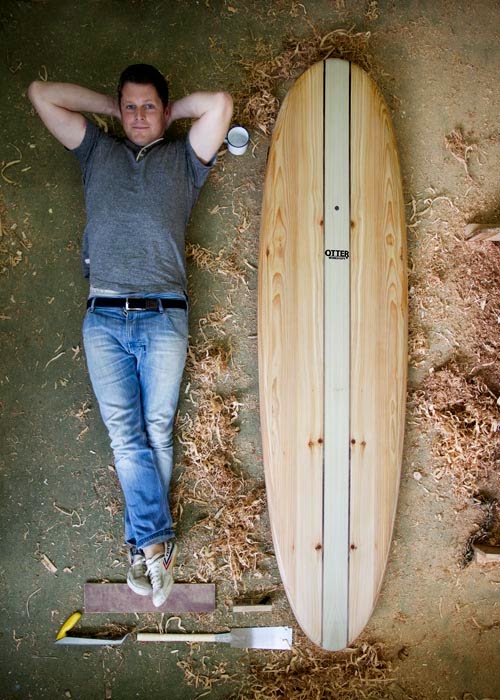
I've amassed quite a collection of images over the past year or two that I've been working with Otter Wooden Surfboards, but because they sit in a different folder on my computer and are technically "work" it has only just occurred to me to share them on here.  Technically speaking I'm James' "content manager" (pictures and words guy), shooting all of the brand's imagery and writing the Otter Surfboards blogs, newsletters and press releases.  It's a job that has seen me swimming around in the shorebreak with my camera, hoisted up the mast of a wooden pilot cutter in the bosun's chair, bivvying on the beach in the summer and trying to keep my fingers warm enough to click the shutter button before the sun's come up in the depths of winter. It's been great.  One of the best parts of my role at Otter is spending a bit of time in the workshop when there are "Build-Your-Own" courses running, meeting the customers who arrive to a stack of raw timber on a Monday morning and documenting their progress throughout the week before they emerge on Friday afternoon as firm friends with a beautiful wooden surfboard that they've built and shaped themselves.  Check out the recently released film below, shot by Tiny Dog Films at our first "AGM" (BBQ) this past October, and our appearance on BBC1's Countryfile that aired last night.  In the meantime, here below is a selection of my favourite images from a great 2013 spent shooting lovely wooden surfboards, workshops and waves for Otter:


"Man Overboard" shot from the bosun's chair hoisted up the mast of the Pilot Cutter Hesper.

James and his dog Buddy, on the search for surf and a spot to sleep on the beach.

Kingley's "Desert Island" surfboard, a 7'4" Island Hopper that he built during a workshop week earlier this year.

A 9'8" big wave gun nearing completion, built for Surfers Against Sewage for Ben Skinner to surf a wave of significant height on to raise the profile of more sustainable surfboard materials.

In the summer the trestles can be moved outside.  James guiding Eddie in shaping the rails of his surfboard.

Our Christmas bodysurfing image:  Surfboard offcuts get turned into handplanes, kind of the bodysurfing equivalent of snow shoes.

Tim joined us for a week in August to build and shape his own 9'4".

Dawn sessions in December. 

Jimmy test riding a 5'6" mini-simmons inspired planing hull, made entirely of Western Red Cedar.

I also make the tea.