Showing posts with label Outdoors. Show all posts

Sunday, September 13, 2015

Outside Food: Bashed Crab


Last summer I published a couple of posts with recipes and suggestions for food to be cooked and eaten outside in the fresh air.  This summer (because of various weekend weddings and work commitments) I had to snatch outside opportunities as and when they arose and so we ended up going on a few mid-week overnight micro-adventures, sleeping out in bivvy bags or just heading to the beach to make dinner rather than doing it at home.  Smashed crab isn't a recipe; it's an assembly and it's perfect for when time is tight and the decision to eat al-fresco is pretty last minute.  There is one condition/requirement though, and that is that you can only really do it if you're on the coast.  Here goes:
  • Buy yourself a cooked crab, preferably from the small boat fisherman who hauled in the pot.  I picked one up for about £5 from the fisherman who's cold store is at the top of the hill coming up from Chapel Porth beach near St Agnes in Cornwall.  If you're near Port Isaac (Cornwall) then you'll be spoilt for choice.  You don't want a picked or dressed crab though, as that takes away most of the fun involved with this grown-up finger food.
  • Pack a camping bowl, fork and teaspoon for each person, nut-crackers (if you have any), an old newspaper, a jar of mayonnaise, the remains of a block of butter, a fish-grill rack and corn-on-the-cob (from your fridge at home, or stop by a shop on your way to the beach).  Go to your shed and grab a pin hammer or a small axe and some firewood.
  • On your way to the beach, stop at a fish&chip take-away and buy a large portion of chips to share.
  • Get to the beach and find your spot.  Light a small fire (we have a little fire pit that we take with us, the size of a large cake-tin) if it's possible to do so without ruining someone else's enjoyment of the beach, and spread out the newspaper using pebbles to stop it form blowing away in the wind.
  • Sandwich the sweetcorn cobs in the fish grill and cook them over the hot coals.
  • Open the chips and jar of mayonnaise.
  • Start pulling limbs off your cooked crab and use the pin hammer or the back of the axe to get at the meat inside, then get to work with the thin handle of your teaspoon to get all of the white meat out of the legs, claws and shoulders.
  • Make a mess.
  • Wipe you hands on a piece of newspaper then wrap all of the crab shells, greasy chip paper and other waste up in the newspaper to take home and put in the bin.
  • Throw a few more pieces of wood on the fire and enjoy the rest of your evening on the beach as the sun sinks into the sea.


Sunday, September 14, 2014

Outside Food: ABC (Autumn Beach Chilli)


There are four key ingredients that elevate this beach campfire meal above a normal chilli:  bacon, beer, dark chocolate and accidental campfire ash.  It’s ideal for keeping the dream alive into the autumn, as you can keep warm around the fire on the beach after surfing if you’re at the sort of spot where you can light a discreet fire that won’t spoil anybody else’s enjoyment of the place.  Alternatively, you could always do it over a fire pit in your garden if you have one.
I’m going to assume that you’ve all cooked some sort of "minced beef and tomato" based meal at some point in your life (chilli, bolognaise, cottage pie etc) so will let you work out for yourself the quantities of ingredients based on the number of people that you’re feeding and how hungry they are.  This will do for about 4 hungry adults who’ve spent a few hours paddling in the sea.


You will need:

  • Decent firewood (bits of tree that still look like bits of tree - nothing tanilised like garden decking and no crap gluey scrap wood like plywood or MDF)
  • Charcoal (bag of)
  • A dutch oven (big, heavy cast iron cauldron) or a heavy old casserole pot, and somebody willing and able to carry it to wherever you’re cooking.
  • Tin foil
  • Knife
  • Wooden spoon
  • Bowls + something to eat with
  • Cup + scissors (optional)

  • A couple of onions
  • A couple of carrots
  • A few cloves of garlic or a decent squirt from a handy tube of minced garlic.
  • 10 or 12 Mushrooms
  • Red and green chili pepper, more or less depending on heat
  • Green and Yellow pepper
  • 1 or 2 fancy long red Ramiro peppers
  • Bunch of coriander
  • Block of butter
  • Small bar of dark chocolate
  • Beef stock cube or pot
  • Tin of red kidney beans
  • 2 tins of chopped tomatoes
  • Salt, pepper and paprika
  • Beer – a couple of those small French stubbies in green glass bottles is ideal.
  • Bacon lardons or cubed pancetta – handful of.
  • Beef mince, about two handfuls is the way I describe the quantity that I need to my local butcher.  He has normal blokey hands, but I don’t know what this translates to in grams.
  • Jacket potatoes or rice


Method:

  • Light a small, hot fire surrounded by rocks somewhere that you’re not going to incur the anger of any busy bodies and where you can easily put out the fire and leave no trace of it ever having been your outside kitchen.
  • Once it’s well established, add charcoal and allow to get to a nice, white, even cooking temperature just like a conventional bbq.
  • Don’t cook over raging flames – wait for white, dusty, embers which give off an even heat.
  • If you’re going with baked potatoes then spike them, wrap them in foil and place them in the embers to bake for an hour or so.
  • Place the Dutch oven on the white coals.  If you’ve got a fancy tripod then hang it from that.
  • Things happen quickly when Dutch ovens get hot, so be ready.
  • Throw in a thick slice of butter and melt.
  • Roughly cut onions and carrots into this and soften until the onion is translucent.
  • Add bacon lardons or pancetta cubes.  Fry.
  • Mix in minced beef, chopped chilis and garlic.  Brown.
  • Season with salt, pepper and paprika.
  • Add about half the bar of dark chocolate, in bits.
  • Roughly chop in peppers and mushrooms (can be left whole).  Soften.
  • Throw in both tins of tomatoes.
  • Put in the beef stock cube or pot.
  • Pour in a load of beer.
  • If you’re having rice then put a pot of water on for the rice the appropriate amount of time before you plan to eat.
  • Let it bubble away and keep stirring.  You can’t control the heat aside from moving it to a cooler part of the fire so just go with it.  Ash will most likely float into the pot too.  So what?  You can’t stop that and it’s just the same as burning meat on a bbq.
  • If you need to add more liquid (beer or water) then do so.  Over the course of 45 minutes or so it should reduce down to a nice thick consistency with a gloopy, shiny gravy.
  • 5 minutes before serving tip in the can of red kidney beans.
  • Tear up the coriander or, alternatively, put it all in a cup and chop in the cup with scissors.  Throw that in.
  • Check seasoning and adjust if necessary.
  • Hook out the potatoes (hoping that they haven’t just turned to lumps of coal) and butter, or drain the rice.
  • Pile into an enamel bowl.
  • Serve with more beer and smoke in your eyes.

When you’re done make sure you kick out your fire or pour a few buckets of seawater on it and dig the ashes deep into the sand.  Take all of your stuff away and don’t leave any trace – there’s nothing worse than being the first person on the beach in the morning and seeing a beautiful beach with a blemish of somebody’s campfire from the night before spoiling the pristine sand.

Also...


If you're UK based and have wandered past the magazine rack in your local newsagent in the past week then you may have seen the latest issue of Wavelength Magazine (#235 Autumn 2014), and if you're particularly eagle-eyed then you may have seen my name on the new-look front cover.  I feel honoured that Tim Nunn and the team at Wavelength thought my photography worthy of a portfolio feature and ran some of my favourite surf images across several double page spreads.  These are images that I've been sitting on for a while, only letting them see the light of day at exhibitions as I was hoping that they might eventually appear at size in print.  I'm so pleased that they're now out there for others to see rather than just sitting on my hard drive.  I'm also really grateful to Mr Chris Nelson (of Approaching Lines and the London Surf/Film Festival) for writing an introduction that made me both laugh and blush in equal measure...and for giving me a new nickname.  
I'd be stoked if you take a moment to check it out, and hopefully see fit to purchase a copy to help support print media.

Sunday, May 11, 2014

Outside Food: Camp Stove Hash


It's May and, despite the long fingers of winter still doing their best to cling on, the weather is by-and-large improving.  For the next six months the light is green for living a more complete life outdoors - eating, sleeping and doing all of the fun stuff in-between out in the fresh air.  So, over the summer months, I hope to drop in a few posts featuring recipes that are best enjoyed when prepared and eaten outside - and I'm going to get the ball rolling with a dish that I have a personal (and so far unbroken) rule to never cook and consume under a roof:  Camp Stove Hash.


Camping food often falls into two categories:  dehydrated or boil-in-the-bag "mystery meals" that were invented for astronauts and are now eaten by kids on Duke of Edinburgh expeditions, or food that doesn't need a lot of preparation or cooking like tinned ravioli, packet couscous and stale sandwiches.  Camp stove hash is another story, with easily transportable ingredients that make a brightly-coloured meal that I'd probably pick off a cafe menu if given half a choice.  It's a two stage process though - so the first stage can be done at home before setting off if you anticipate working up a hunger and wanting to refuel as swiftly as possible.  Prior preparation and all that…


Stage 1:  Potato Wedges

  • Potatoes - quartered lengthways, par-boiled, dusted with salt, pepper and a heap of paprika and then shallow-fried in batches until crispy. 
Stage 2:  Camp Stove Hash

  • Equipment: Camp stove, pan, pocket knife and a wooden spoon.  Fork and fresh air to eat with.
  • Ingredients: Potato wedges (see stage 1), onion (optional), chorizo sausage (the ready to eat sort), small bottle of cooking oil or butter,  bag of spinach, salt, pepper and paprika. 
  • Method:  Find a level, sheltered, spot out of the wind and get your camp stove lit.  Heat a touch of oil and roughly cut your onion straight into the pan taking care not to add any bits of finger or a thumb to the ingredients.  Soften.  Cut the chorizo into slices about as thick as a pound coin and add these, allowing them to release their bright red oil and crispen up.  Tip in as many potato wedges as you want to balance out the dish or satisfy your hunger and stir the whole lot together, breaking down the wedges a bit and combining all of the ingredients - add a little more paprika at this point if you fancy it.  Heat through.  Add spinach a handful at a time, stirring it in and allowing it to wilt down before adding a bit more.  Season to taste.  Keep over the heat for a few minutes then share it straight from the pan.

Sunday, December 29, 2013

Set Sail For Adventure


"A ship is safe in harbour, but that's not what ships are for."

William G.T. Shedd

It's that time of year when resolutions are made and plans for the year ahead start bubbling away.  Whether your plans are set close to home or further afield, just make sure that you get out there and enjoy yourself.  The world is best enjoyed first hand rather than through a screen after all.  Wishing you all a very happy, fulfilling, productive and adventurous 2014, I hope to see you out there.

Monday, September 16, 2013

Tin Mugs


There is something special about drinking out of a tin mug.  That something just shouts "OUTDOORS!" almost as much as the smell of wood smoke on a flannel shirt.

Since the 1920's these white mugs with the classic blue rim have been a staple piece of kit for anybody who is spending a night sleeping outside, for whatever reason.  Made by fusing porcelain onto steel at over 750ÂșC, enamel mugs (and other plates and cookware) are pretty sturdy bits of kit that are not only durable but chemical resistant and you can put them straight onto a heat source.  You can even use them to make pies.  Typically these things get knocked around alot; hung off the sides of kit bags or balanced precariously on rocks, but the worst that usually happens if they get a big knock is that some of the porcelain chips off and the exposed steel underneath goes a bit rusty.  But that's adding character right?
It's lucky that these simple tin mugs evoke such strong loyalties from people who have the twin passions of hot caffeinated drinks and getting out into nature, because they don't half burn your lips when you try to drink from them too soon, and your tea goes cold kind of fast.  But trying to strike the perfect balance between drinkability and not scorching yourself is a pleasant challenge to try and master (an outdoor skill right up there with building a fire and gutting a fish) and at least you can be safe in the knowledge that when you're drinking from a tin mug you're more than likely out in the fresh air, and celebrate that fact.

Top image:  Kate's Cornish coastpath coffee break, August 2013.
Bottom image:  What an Otter Surfboards tea break looks like - the image that's been heading up the wooden surfboard company's blog page and, until recently, monthly newsletters. 

Oh, and one last thing:  this past week I finally went and hit the "publish" button on the Mat Arney Photography facebook page. I'd be super grateful if you'd head on over and click the "like" button to get updates on blogs and other photographic work every now and then.  Many thanks, Mat.

Sunday, December 23, 2012

Catcha Fire


Fire.  To me it ranks alongside, if not above, the ocean in terms of acting as nature's very own television set.  I can stare into a fire for hours and that's not me being odd, that's something embedded in each and every one of us.  That's passed down from our cavemen ancestors.  It's in our DNA as human beings.
It's a couple of days after the winter solstice in the northern hemisphere so the days are starting to lengthen in their slow run-up to summer, even if it is barely perceptible.  But just because the worst of the darkness has passed, we're by no means out of the woods in terms of the cold.  As far as the cold goes, the worst is yet to come, and we'll still be lighting fires to keep warm for a few months yet.  But you don't stop lighting fires just because the sun comes out.  What do you think a barbecue is after all?  What do you gather around on summer evenings after a day on the beach?


In the words of the guys from the Best Made Company in the video featured below:

"The fire elicits a lot of different things, but the two things that come to mind are just conversation, and silence."

A fire can be the nucleus for storytelling, or the catalyst for quiet reflection, and often the same fire hosts both.  


Fancy a fire?  Here's a quick guide to generating some light and warmth, whether it be in the fireplace in your front room or out in the woods:


  • Start small and get bigger.  You need small, easily flammable material to start your fire off, such as scrunched up newspaper, thin twigs or wood shavings.  This'll catch light easily but burn out fast, but you're just using it to set fire to the thicker, longer burning stuff.  This chain goes from tinder to kindling right through to big logs.
  • Use seasoned logs at home (wood that's been left to "dry out" for at least a year) and dead wood in the outdoors, otherwise all of the energy goes into burning dampish wood and not into generating heat and light.  You'll just have a smokey, hissing and spitting fire that you have to lavish attention on for very little reward.
  • Allow air to flow around the flame as you grow you fire.  Don't suffocate it, fire needs to breathe too.
  • Lay your fire with tinder as it's base.  Kindling goes over the top of this, usually leant up around it in a teepee style, or cross hatched over the top.  Once the kindling has caught then you can add thicker split branches and logs in the same fashion, being careful not to collapse the structure.
  • Keep your blaze small and hot, to develop a "heart" of glowing embers.
  • If you want to cook over your fire then you're best off lashing three stout poles together into a tripod from which you can hang a pot.  Cook over your fire once it's died down to white-ish embers, just the same as with a barbecue.  Naked flame will just burn your food without cooking it through.
  • If you need your fire, then tend it carefully and don't let it die out.  It's much easier to keep your fire fed and alive than it is to go through the whole process of lighting it again.
  • Splitting logs and chopping kindling is way easier with a good, sharp, axe.  But mind your fingers won't you.
  • Don't be an idiot with fire.  Keep a bit of healthy respect for nature.  If you're outside then try to build your fire where others have had campfires before, dig a shallow basin or surround your fire with rocks to avoid it spreading and don't build a fire if it's unnecessary or you're in an area at risk from wildfires.  


Rob awakening the embers still glowing from the previous night's fire.  I slept curled around this wood-burning stove trying to ward off the draught coming from their spare room nicknamed "Narnia" because of it's icy breeze.  This fire would be kept alive for days at a time, and keep the kettle permanently warm.


What the Tree Remembers, the Axe Forgets from Dark Rye on Vimeo.
Does this short webisode not just make you want to take a trip out to the woods for a few days?  It does me.

All images by Mat Arney.

Sunday, September 30, 2012

The Dirtbag Diaries - Meditation in Motion


More audible than visual this week, I'm really pleased to be directing you towards The Dirtbag Diaries.   

The Dirtbag Diaries is a fantastic outdoor sports podcast produced by Fitz and Becca Cahall out of Seattle, USA, with the support of Patagonia, New Belgian Brewing, and Kuat Racks.  If you're into spending time in nature, be it climbing, biking, surfing, kayaking, fishing or hiking, then I would highly recommend listening to their podcasts.  Earlier this year I submitted a recording of a short essay to them for their "Shorts" series, and after a bit of trans-Atlantic editing, it's now live on their site for free download. 
  

The subject of my essay was how taking your time to travel overland has a similar meditative effect to that found when immersing yourself in an activity such as riding a wave or climbing:  focusing on motion and losing the distractions of everything but the here and now.

I posted a link to my initial recording in a previous post, but if you didn't listen to that then please click through to their site to either listen to, or download, a fully polished and professionally produced version (here).  Doing this will help to support a podcast that is arguably the truest and most concise voice for anybody with either a general affinity for the outdoors, or for those who organise their lives around sleeping in a car to wake up early and see the sun rise whilst being actively involved with their environment.  

Massive thanks to Fitz and Becca for taking on my essay and for their patience in helping me to edit the script and then record it for them, and finally for producing it for publication. 


Sunday, May 30, 2010

PANOVISION


Back in the depths of winter I found my dream camera on a certain internet auction site: a Hasselblad x-pan 35mm panoramic rangefinder camera. I quickly figured out which of my meagre possessions I could sell and even dipped into my sacred surfboard budget but it ended up selling for four times my bid. Who was I kidding??! As a consolation prize I had a rummage in my camera box and pulled out a crappy "panoramic" point and click excuse of a camera, basically a cheap toy thing with two bits of plastic screening the top and bottom of the frame cropping it out and making a wider than normal image. I put a crap roll of film in the crap little camera and stuffed it in my pocket. 36 shots and 5 months later I got the film developed, and just look at what came out, here's my top ten...


Early January, police warnings to make no unnecessary journeys due to heavy snow. We loaded up the Landrover and drove across Bodmin Moor, Davidstow Moor and onto Dartmoor to go climbing, passing scenes like this.


A junky needs their fix. A mile inland the snow and ice forced us to turn around and settle for the junky surf of home: MJH encased in neoprene heading in whatever.


Davo and me could check the waves from our loungeg window at low tide, but as the water pushed in we had to walk along to the cliff top. February evening, trying to decide if it's worth getting cold for.

My friends Rob and Sarah are my inspiration for living well. They live in a walled garden on an organic herb farm with their chooks, ducks and sheep, off the grid and an example of the good life for the rest of us.

A wide angle view of another perfect wave going hollow and unridden at a certain spot in West Australia. Not for long as I was already halfway into my wetsuit.

My good friend Krede with a truck full of big boards for riding big waves. We only needed our regular boards this afternoon for surf number 2.

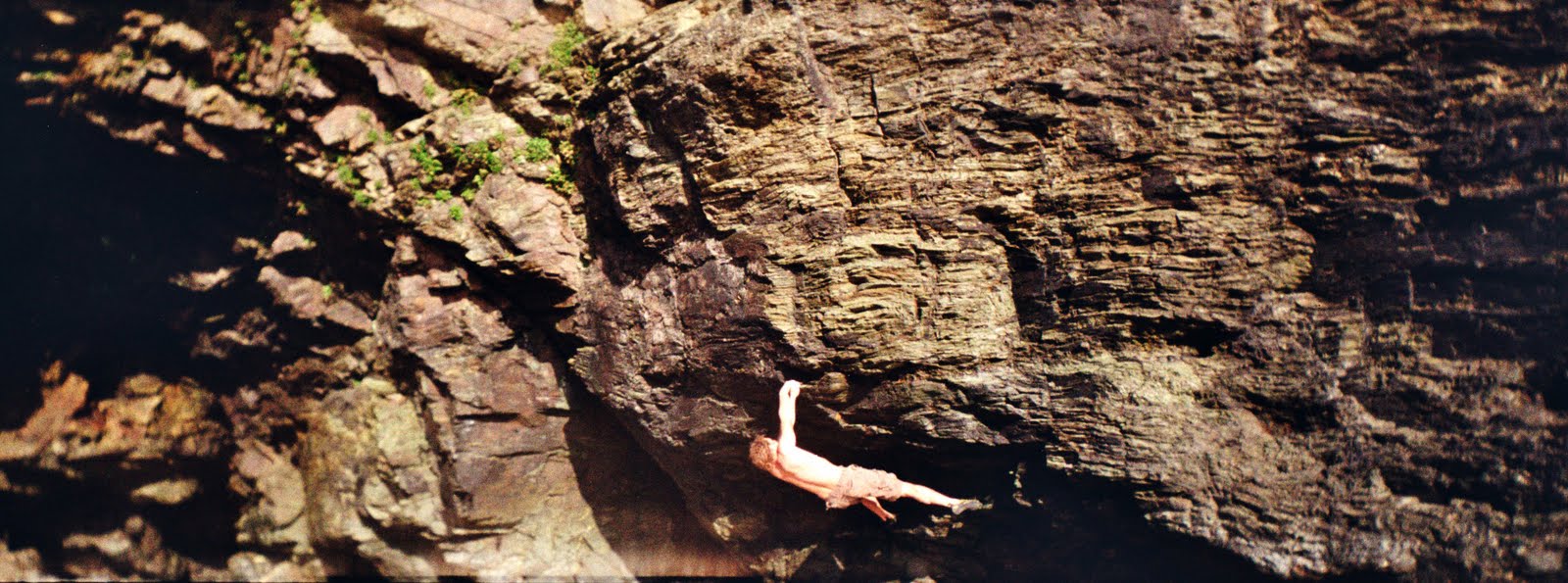
My housemate Matt pausing/tensing for breath and a look around on a gnarly and as yet un-named free solo ascent a stones throw from our house on the nearby cliffs.

The "other" view of Pentire Head, with Gulland and Newland sitting seaward. Turns out it's a beautiful bit of coastline whichever direction you're looking at it from.


I shaped an alaia recently, an ancient Hawaiian wooden and finless surfboard design. Before I could though I had to recondition the hand plane that I inherited from my Grandad who was a wooden boatbuilder and master cabinetmaker. I felt the pressure of craftsmanship and I hope I did a worthy job.
Andreya Triana under the spotlight fronting Bonobo on the recent tour for the Black Sands LP.
With no control over aperture, exposure or even focus this camera was always a gamble machine. There's something about panoramic images though, I guess there's a reason why our eyes are side by side and not one above the other after all.

Sunday, March 28, 2010

Moving on...


Moving house is not a task that that I particularly enjoy. Which is ironic, because I would estimate (conservatively) that in the past 9 years I haven't lived in one place for any more than 9 months. Of that, the last 6 years the maximum amount of time that I have spent residing in any one dwelling is 6 months; which means that by now I am pretty good at this moving house business. I feel a bit like a snail. So I have spent this weekend packing up my life once again and shifting it someplace else, leaving behind one of the most astoundingly beautiful views on the Cornish coast. Here's a rough image of the view out of my window these past 6 months, certainly one of the things that I'll miss alongside being able to step onto the sand and paddle out from the bottom of our garden. You know what they say though....."a change is as good as a holiday" and anyways, regularly changing your view keeps life interesting.


Top Image: A shearers cottage that I lived in whilst working on a big sheep station on the South
Island of New Zealand in 2007.

Bottom Image: An unfortunately dusty and scratched negative scan of the view from the smug lounge window of Wavecrest, New Polzeath, Cornwall. Winter 2010.