Sunday, July 4, 2010

On The Road


It's the book that launched a million road trips.
Kerouac's train of thought tale of criss-crossing North America and Mexico was his effort to "explain everything to everybody" by way of skid row stories, hopping freight trains, jazz, pot and stolen cars in a definition of the beat movement that he inadvertantly found himself the poster boy of.
It's a good reminder that sometimes the best thing that you could possibly do is just GO. No direction or aim to speak of, just the wind at your back and an inquisitive mind. It'll get you a long way. That and a smile. Placing the journey over the destination, if there even is a destination, and just see what the hell happens out there along the way. The places you end up, the people you meet. Be open to the things that happen, the things that would be a stick in the spokes if you were rolling with deadlines and itineraries to keep but now instead become the opportunities and the gateways to the things that you'll actually remember. Hit and hope.
"Fifty years after the novel's publication (fifty three now), the book continues to inspire and awe those who pick it up for the first time. For those who are seasoned readers of Kerouac, the book serves as a signpost to the past, marking a transition, a rite of passage when they first realised that there is a world out there beyond their hometowns where starlight shimmers in the desert heat and the wind blows lonesome snow drifts across mountain passes like cold, unfeeling fingers."
Paul Maher Jnr
Hit the road and see what happens soometime. I'll see you out there.

Sunday, June 27, 2010

Iron like a Lion


Hearing one of these beasts roar is one of the most terrifying sounds that's ever gone down my ear canal. It's such a primitive deep noise and so so loud that I can't quite comprehend how they can produce such a sound. It makes you remember that, alongside sharks and crocs, some animals on this planet are just out an out killing machines; the cumulative result of millenia of evolution with a singular purpose. They are awe inspiring animals.
I shot this image from the passenger seat of a landrover as we bounced along through the African bush in the middle of the night. I wasn't allowed to use the flash on my camera because it would've startled the cat so the ranger whom I was with drove one handed and held a spotlight with the other, training it on the lions face as we kept pace alongside it.
We were out with the sunrise the next morning, and as we rounded a corner we could see a tree shaking. It turned out to be a blue wildebeest (aka a gnuu) scratching its arse on the lower branches, but just behind it in the bushes we spotted a lioness on the stalk. My fingers were cold and I fumbled my camera that badly as she leapt out of the bushes and the wildebeest bolted -it was still on the same settings from the night before, pretty much the opposite to what I needed it on right now to capture this hunt in action. I managed to get this shot and the wildebeest lived to say another day, but ever since whenever I put my camera back in its bag I make sure I've put it back on my regular settings. Lesson learned.


Sunday, June 20, 2010

Mind-Surfing


I'll let the photograph do the talking this week. A certain fickle reef off the corner of a sparsely vegetated bit of coast on one of the seventeen thousand islands that make up the Indonesian archipelego. Bear in mind that this wave gets bigger, faster and hollower as it rolls down the line. Look at those waves (particularly the second one), think about that, and I'll leave you to get lost in a few minutes mind-surfing. Enjoy.

Sunday, June 13, 2010

A Moment of Distraction


The street outside my house looked like the ocean. The problem was that from the front of the house there was an uninterrupted view of the Indian Ocean, and the only reason the road looked just like it was because it was covered with ground up broken glass that glistened in the sun and sparkled like the sea.
At the end of the street, on the corner, was an empty lot again covered in broken glass and behind that a big blue house with grills on the window. This building housed the Joshua Project.
The Joshua Project in Jeffreys Bay, South Africa, is a Christian charity that seeks to provide a safe haven for vulnerable children and the street kids of the town, clothing, feeding and trying to provide them with a basic education. They also now teach them to surf.
Imagine: Kids as young as 8 years old who have to live and survive on the street. I don't care about the religious connotations of the Joshua Project, the work that they do is amazing and massively admirable.
Whilst I was living out there and working at Jeffreys Bay Surf School my boss and I went to a few meetings at the Joshua Project. Attempts had been made before to get some surf lessons up and running but the kids interest had dwindled and they hadn't had the necessary structure to their day to ensure it's success. Part of the reason was that they never knew when to turn up. None of these kids owned watches and literally survived day to day, meaning that they rarely knew what day of the week it was. They had that structure and routine now though, so on Wednesday afternoons we started teaching them to surf. I wondered whether the numbers would drop off each week as their interest waned. Instead, each week more and more kids turned up until there were more than we had surfboards for. They wore donated wetsuits that were inevitably far too big for them or riddled with holes but enthusiasm kept them warm.
I dragged in a load of friends and volunteers to help out, and Tom the bar manager from the backpackers hostel where the surf school was based ended up putting "helping the Joshua Project surf sessions" on the rota for his bar staff.
We enforced some pretty basic rules. Most of these kids had no homes or contact with their families, they lived on the streets and/or had been victims of abuse of some form or other - they had a myriad of problems that they distanced themselves from by turning to substance abuse. In the majority of cases they sniffed glue because it's cheap, readily obtainable and got them stoned. It meant they didn't have to think about stuff.
If they turned up stoned, no surfing. If they'd been in trouble, no surfing. It got to the point where the Joshua Project could use the surf lessons as leverage to get the kids to attend their normal school classes. When I left a few months later the surf sessions were going strong. My friend Dale took over my job a while after and ended up doing two sessions a week for them. He then started taking the bigger and more competent kids out to the reefbreak at the end of the beach, and it sounds like they're making good progress a year on.
Pretty good for kids who can't swim.
The point that I want to get across is this: Surfing, like a lot of other pursuits, is a form of meditation in motion. It brings us completely into the present moment where we don't reflect on the past or think about the future, all we're worried about is what's happening NOW. This couldn't be of greater benefit than to the kids who are helped by the Joshua Project. I'd wager that they've each got more problems that they need to escape from than a lot of us have put together.

A moment of distraction.

I hope that the surf sessions now provide those kids with some escapism from the daily struggles that they face just to get through the day before finding an empty doorway to lie down in for the night. These are the kids who people cross the street to get away from when they bowl through town with a collection of mongrel dogs yapping at their heels. Dale told me that when a guest at the backpackers was robbed on the beach one day, the street kids from the Joshua Project helped to get his camera back. Some of the opinions and preconceptions of these kids are starting to change, and hopefully it'll give them a chance to make a break away from the situation that they've grown up in.
Regardless, at the very least they have a smile on their faces for an hour on Wednesday afternoons.


Top Image: Photograph by Niels, a Dutch guy who helped out with the first few Joshua Project surf sessions. That moment of distraction, captured on camera.

Image Below: Photograph by Roger Arney. Myself and Tom Jones from Island Vibe backpackers hostel trying to get across the concept of turning a surfboard within two minutes (the kids don't have very long attention spans) and with a language barrier, being that English is these kids third language after Afrikaans and isiXosa and my grasp of isiXosa obviously ain't that good...


Sunday, June 6, 2010

Surf Tax


Photos taken by Tim Delaney, punishment taken by Paul Anderson.
Everybody has to pay their dues some time or another. Whether you do so in small, regular instalments or save it up for the mother of all beatings like my friend Ando pictured above is niether here nor there. We all gotta pay.
Every single person falls off their surfboard, it's just the way it works. You come up, get a breath of salty air, get back on your board and paddle back out to do it all over again. The point is that you realise you survived, so it's ok to give it another go because taking that tumble wasn't all that bad. Well, most of the time. When you fall off the horse, the best advice out there is just to get straight back on the horse.
Wipeouts are the taxes of surfing.
The bigger the reward, the bigger the risk. Pulling into a massive barrel that you can't touch the sides of could be the best moment of your life so far, but the reason why it's so mind blowingly amazing is because most humans can't just do it every day, on every wave. There's a fairly good chance that you won't make it which is part of what makes it so incredible when you do.
But Ando's spill above is a particularly nasty one; the kind you don't forget in a hurry. I used to work for Paul and he's a solid surfer from West Australia, he had a successful competitive career as a junior and is happily comfortable in big, heavy barreling surf.
Here, he's about to get drilled by a chunk of water tripping over the reef at Lakey Peak in Sumbawa, Indonesia. The thing about Lakeys is that you have to try really hard to hit the reef there. There must be a trench in the reef just in front of the peak because it gets pretty deep. It's the only place where I've consistently had to climb my leg rope to find "up" and get to the surface after catching rail and falling off; it just pushes you deep and rolls you around for a long time. My friends Al and Cynrig climbed up each other in the race for the surface - Al got his head up, inhaled and then was pulled under by Cynrig who reached up from the blue depths and climbed his leg like a ladder.
Ando managed to hit the bottom pretty good though:
"I came up with my boardies shredded and hanging on round one ankle, pretty much nude, and looked down at myself just as all the little reef slices on me started to turn red. There were guys who'd been sat on the judging tower watching swimming out to get me..."
It would be easy having heard that cautionary tale and seeing the pictorial run up to it to just take the little wipeouts, the comedy foot slips and the almost enjoyable trips over the falls on small waves. But then you'll never find yourself stood tall in that cavern of moving ocean, and at the end of the day everybody wants a stand up barrel.
It's the whole point of surfing.

Sunday, May 30, 2010

PANOVISION


Back in the depths of winter I found my dream camera on a certain internet auction site: a Hasselblad x-pan 35mm panoramic rangefinder camera. I quickly figured out which of my meagre possessions I could sell and even dipped into my sacred surfboard budget but it ended up selling for four times my bid. Who was I kidding??! As a consolation prize I had a rummage in my camera box and pulled out a crappy "panoramic" point and click excuse of a camera, basically a cheap toy thing with two bits of plastic screening the top and bottom of the frame cropping it out and making a wider than normal image. I put a crap roll of film in the crap little camera and stuffed it in my pocket. 36 shots and 5 months later I got the film developed, and just look at what came out, here's my top ten...


Early January, police warnings to make no unnecessary journeys due to heavy snow. We loaded up the Landrover and drove across Bodmin Moor, Davidstow Moor and onto Dartmoor to go climbing, passing scenes like this.


A junky needs their fix. A mile inland the snow and ice forced us to turn around and settle for the junky surf of home: MJH encased in neoprene heading in whatever.


Davo and me could check the waves from our loungeg window at low tide, but as the water pushed in we had to walk along to the cliff top. February evening, trying to decide if it's worth getting cold for.

My friends Rob and Sarah are my inspiration for living well. They live in a walled garden on an organic herb farm with their chooks, ducks and sheep, off the grid and an example of the good life for the rest of us.

A wide angle view of another perfect wave going hollow and unridden at a certain spot in West Australia. Not for long as I was already halfway into my wetsuit.

My good friend Krede with a truck full of big boards for riding big waves. We only needed our regular boards this afternoon for surf number 2.

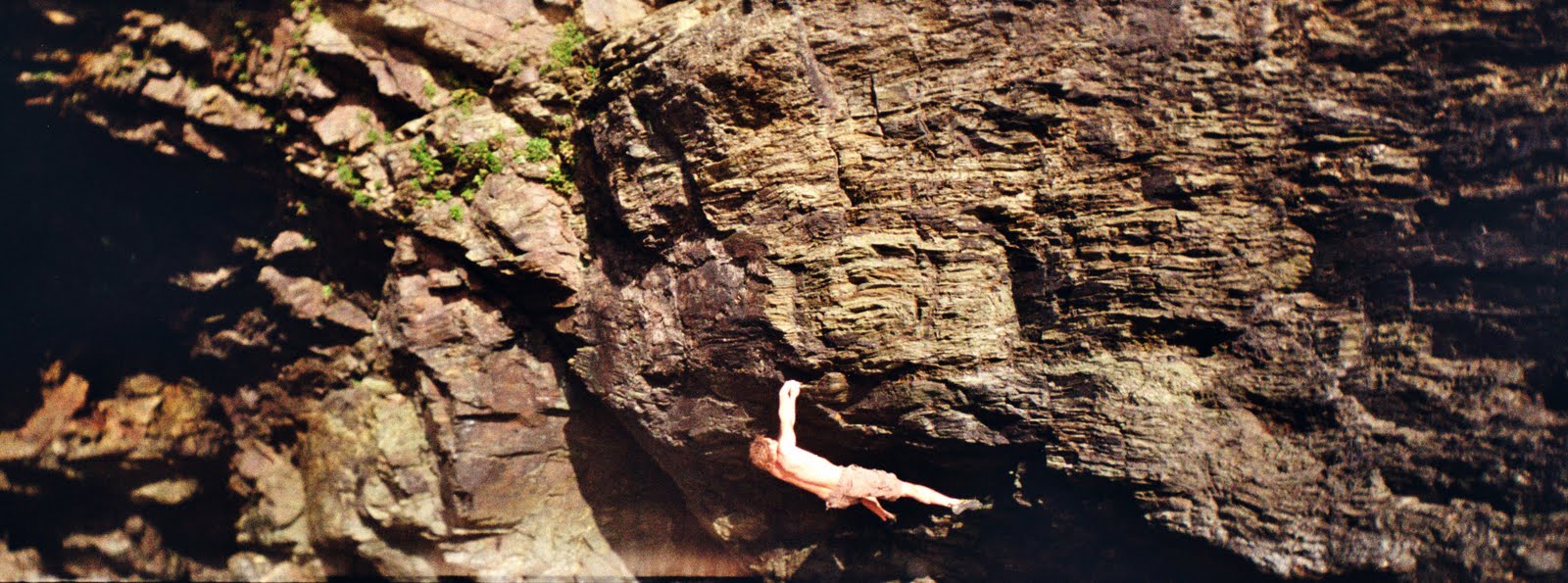
My housemate Matt pausing/tensing for breath and a look around on a gnarly and as yet un-named free solo ascent a stones throw from our house on the nearby cliffs.

The "other" view of Pentire Head, with Gulland and Newland sitting seaward. Turns out it's a beautiful bit of coastline whichever direction you're looking at it from.


I shaped an alaia recently, an ancient Hawaiian wooden and finless surfboard design. Before I could though I had to recondition the hand plane that I inherited from my Grandad who was a wooden boatbuilder and master cabinetmaker. I felt the pressure of craftsmanship and I hope I did a worthy job.
Andreya Triana under the spotlight fronting Bonobo on the recent tour for the Black Sands LP.
With no control over aperture, exposure or even focus this camera was always a gamble machine. There's something about panoramic images though, I guess there's a reason why our eyes are side by side and not one above the other after all.

Sunday, May 23, 2010

Bonobo


It's hard to pigeon-hole the music of Bonobo. I could best narrow it down to "loosely electronica based atmospheric orchestral compositions which is kind of up-tempo ambient in style, melodic, some instrumental tracks and some vocal tracks, part ethereal and part driven and beat based"...but you see what I mean, kind of hard to describe. Suffice to say he's signed to Ninja Tunes which will give you an idea - just look at the calibre and diversity of stable mates such as The Cinematic Orchestra, Fink, Mr Scruff, Hexstatic and Amon Tobin.
My friend Ru turned me on to the creations of multi-instrumentalist Simon Green a few years ago and I've had his albums on heavy rotation ever since, especially when I'm sat on trains or in airports, for me it's kind of transit music.
So three years since his last LP Days To Come, there's new Bonobo album out called Black Sands, which he's been touring with an eight piece band/orchestra fronted by singer Andreya Triana who also appears on the new album. They played the Hippo Club in Plymouth a couple of nights ago and I managed to sneak my camera gear down to the front row and get some shots. Griff from Jelly Jazz collared them for an interview which is well worth a read and features some new tracks and the video to "Eyes Down".
The tour continues, climaxing at this years Glastonbury, go look and listen if they're passing by.
For all you music heads the set list was as follows:
  • Kiara
  • Ketto
  • All in Forms
  • Stay the Same
  • Days to Come
  • The Keeper
  • (Drey's solo bit)
  • Kong
  • Noctuary
  • Recurring
  • We Could Forever
  • Eyesdown
  • Nightlight
  • Transmission '94
  • El Torro (encore)
  • Between The Lines (encore)

And images from the top down are: Nightlight; Mr Green (a.k.a. Bonobo); Flutist; The Drums Hold it All Together; and Spotlight Silhouette.